Universitas Andalas - Research Directory


 UNIVERSITAS ANDALAS
  Penelitian Article Review
 Rp 40.500.000,00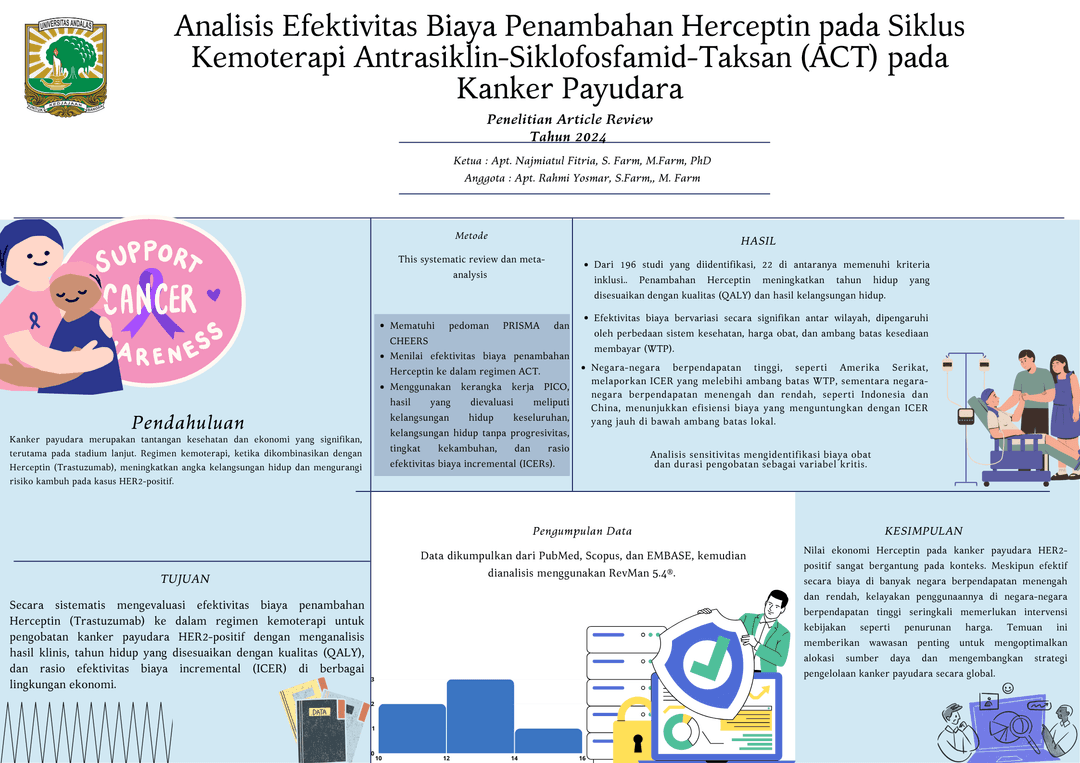
Background: Breast cancer is a leading cause of cancer-related deaths globally. The addition of Herceptin to the ACT (Adriamycin, Cyclophosphamide, and Taxane) chemotherapy regimen has shown positive outcomes for HER2-positive breast cancer. However, its cost-effectiveness remains a concern. Objective: This study reviews the cost-effectiveness of Herceptin combined with ACT chemotherapy in treating HER2-positive breast cancer. Methods: A systematic review using the PICO framework was conducted, with patients (P) diagnosed with breast cancer, Herceptin (I), ACT chemotherapy (C), and therapeutic outcomes (O) as the focus. A literature search was performed in four databases: PubMed, Embase, Cochrane Library, and Science Direct, using relevant keywords and MeSH terms. Results: A total of 196 articles were identified, with 184 remaining after removing duplicates. After screening, 35 studies were included for further review. The cost-effectiveness of Herceptin in the ACT regimen varied depending on factors like healthcare system perspectives, willingness-to-pay thresholds, and regional economic contexts. Conclusion: While Herceptin combined with ACT chemotherapy is clinically effective for HER2-positive breast cancer, contextual economic factors influence its cost-effectiveness. Additional research is needed to optimize resource allocation and evaluate long-term outcomes.
While trastuzumab-based therapies show substantial clinical benefits, their cost-effectiveness is heavily influenced by drug pricing, healthcare system perspectives, and local economic conditions. Comprehensive pharmacoeconomic evaluations are vital to balance clinical efficacy with affordability, enabling equitable access to these life-saving treatments. Future research should focus on reducing the economic burden of trastuzumab through innovative pricing models, generic production, and strategies to mitigate treatment-related toxicities.