KORELASI PROFIL TESTOSTERON PLASMA DARAH DENGAN KUALITAS SPERMATOZOA AYAM KOKOK BALENGGEK
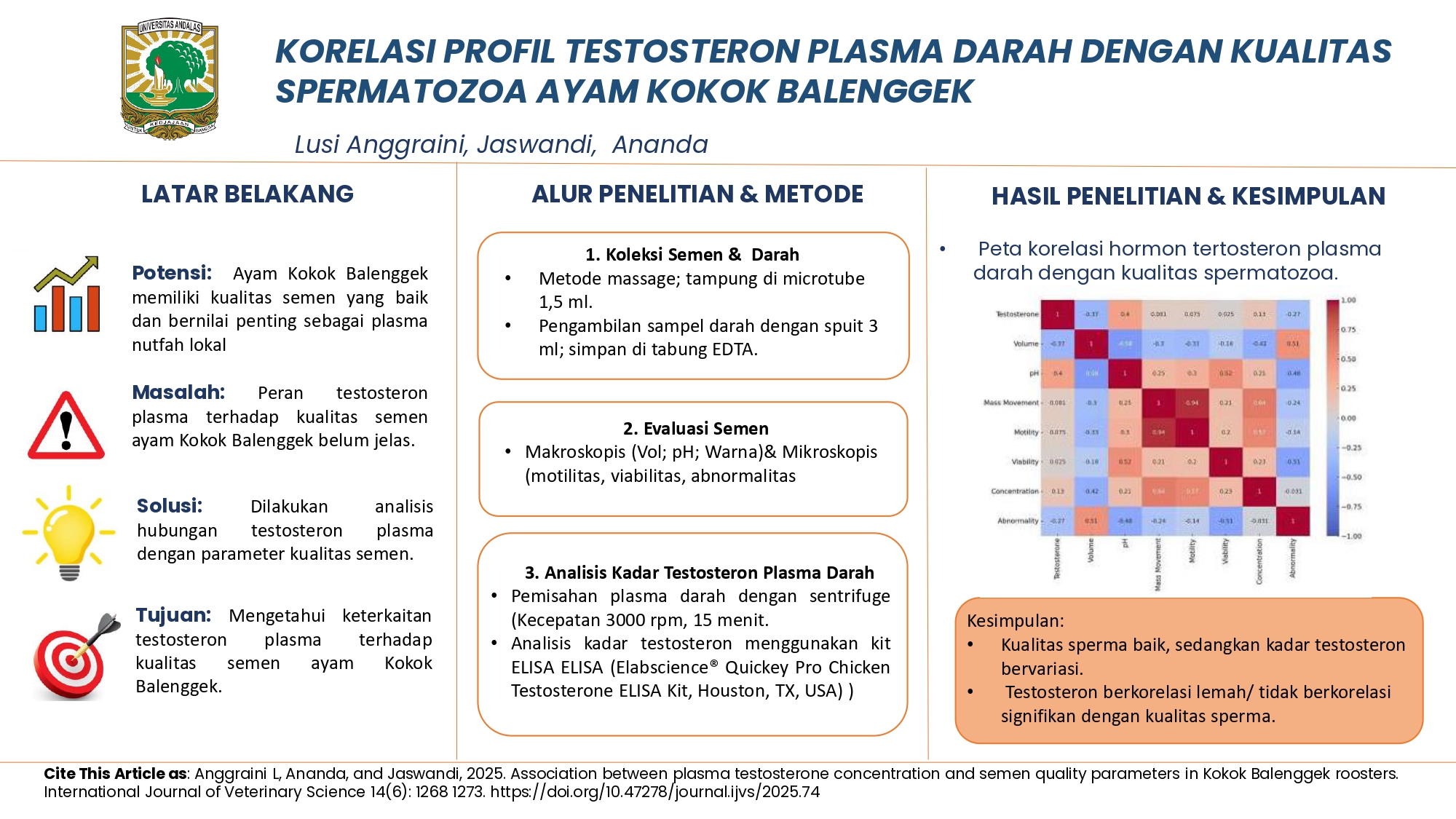
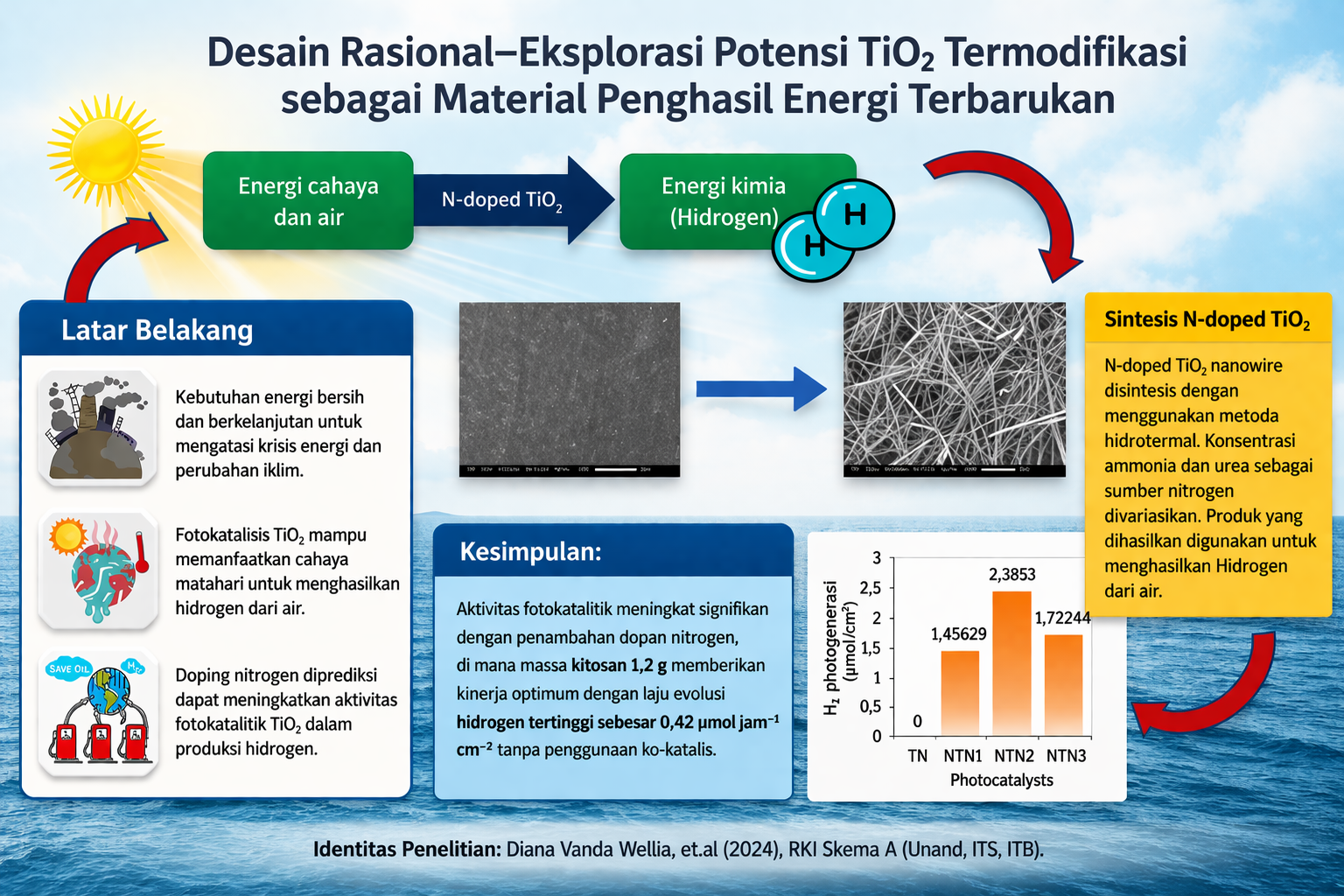
Penelitian ini bertujuan mengevaluasi hubungan kadar testosteron plasma dengan parameter kualitas semen pada ayam Kokok Balenggek (KBR), mengingat androgen berperan penting dalam fungsi reproduksi jantan. Sebanyak 15 ekor pejantan KBR umur 1–2 tahun diamati, dengan pengambilan sampel semen dan darah sebanyak 4 kali per individu pada interval 10 hari (total 60 sampel). Semen dievaluasi secara makroskopis (volume, pH, warna, dan konsistensi) serta mikroskopis (gerak massa, motilitas, viabilitas, abnormalitas, dan konsentrasi), sedangkan testosteron plasma diukur menggunakan metode competitive ELISA. Hasil menunjukkan kadar testosteron plasma rata-rata 18,90 ± 7,27 ng/mL, dengan kualitas semen relatif baik, yaitu motilitas 82,77 ± 7,04%, viabilitas 88,94 ± 1,62%, abnormalitas 9,02 ± 2,86%, dan konsentrasi 2.630 ± 696,42 juta sel/mL. Analisis korelasi Pearson menunjukkan hubungan testosteron dengan seluruh parameter kualitas semen bersifat lemah dan tidak signifikan (p>0,05). Temuan ini mengindikasikan bahwa testosteron plasma saja belum dapat dijadikan prediktor utama kualitas semen pada KBR. Oleh karena itu, penilaian fertilitas pejantan perlu mengombinasikan evaluasi semen, kondisi fisiologis, serta faktor lingkungan dan manajemen pemeliharaan untuk mendukung seleksi pejantan dan konservasi ayam lokal.
Tahun Penelitian: 2024
Ketua: Prof. Dr Ir Jaswandi, M.S
Anggota:
- Ananda, S.Si, M.Si
Kata Kunci: Ayam Kokok Balenggek; testosteron plasma; kualitas semen; ELISA; fertilitas
1772865369.jpg)